

Architecton: Practicing openness with a film about concrete.
4 minute read | Mattie Hinkley

Last week, I went to see Architecton. I went in knowing nothing about the film or the director, but trusting the curation of The Pageant, Chico’s independent theater. I didn’t even watch a trailer. The film was described to me only as “a documentary about concrete and stone.” This description would prove to be right, but also very wrong.
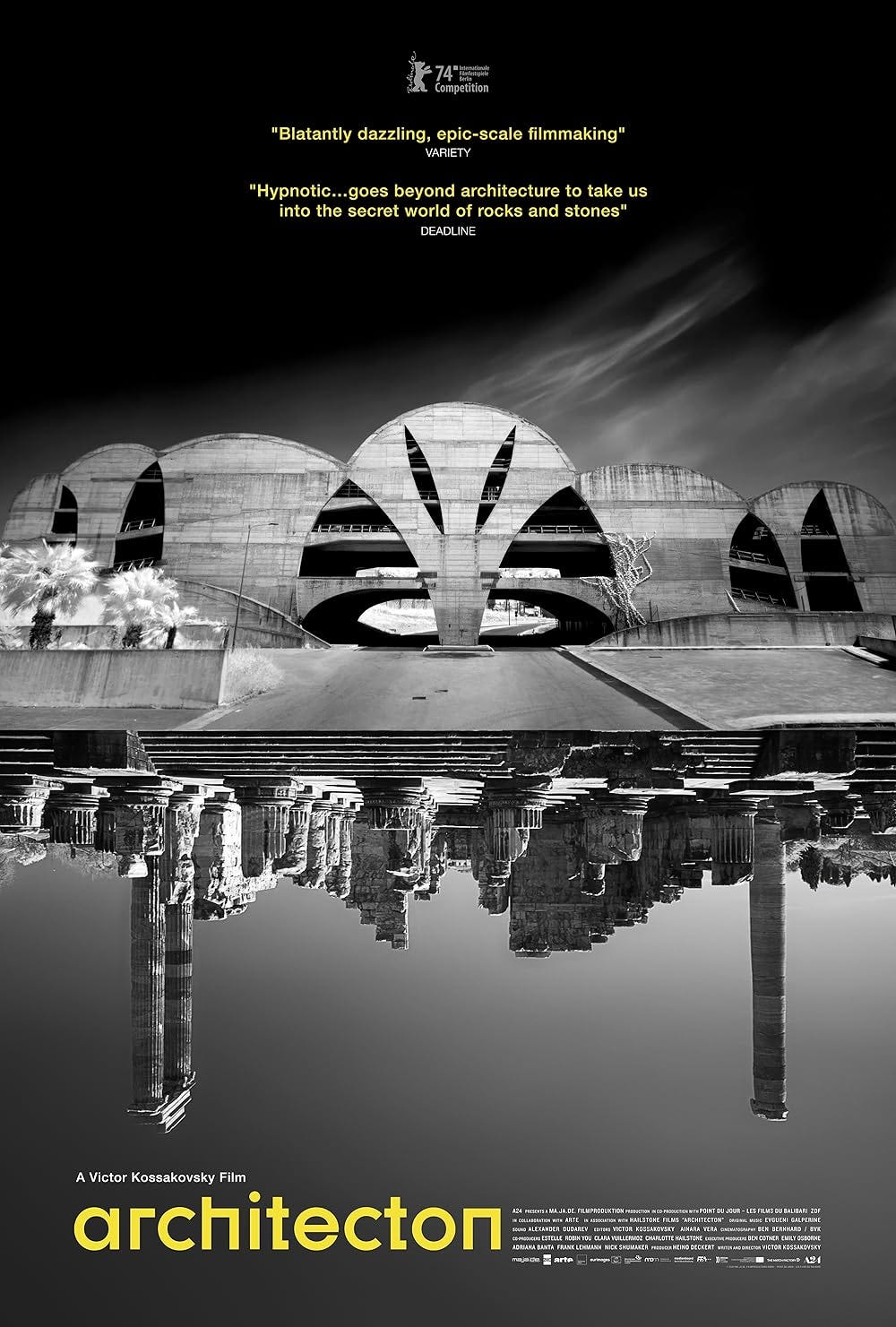
Seeing a film, or really, engaging in anything new, without an understanding of its context can be thrilling. It can help you understand yourself better by offering possibilities of interest you hadn’t imagined. Our cultural world, particularly the visual arts within it, is so heavily curated it can be impossible to tell the difference between what you really like and what you’re supposed to like. Had I known that Architecton was an A24 film, and had I been familiar with director Victor Kossakovsky, my expectations would have shifted. His previous films (Aquarela, Gunda, ¡Vivan las Antípodas!) are slow, beautiful, immersive, and almost entirely without plot or dialogue. Panoramic visual feasts, Kossakovsky pairs incredibly high definition footage with a minimalist instrumental score. I did not know this.
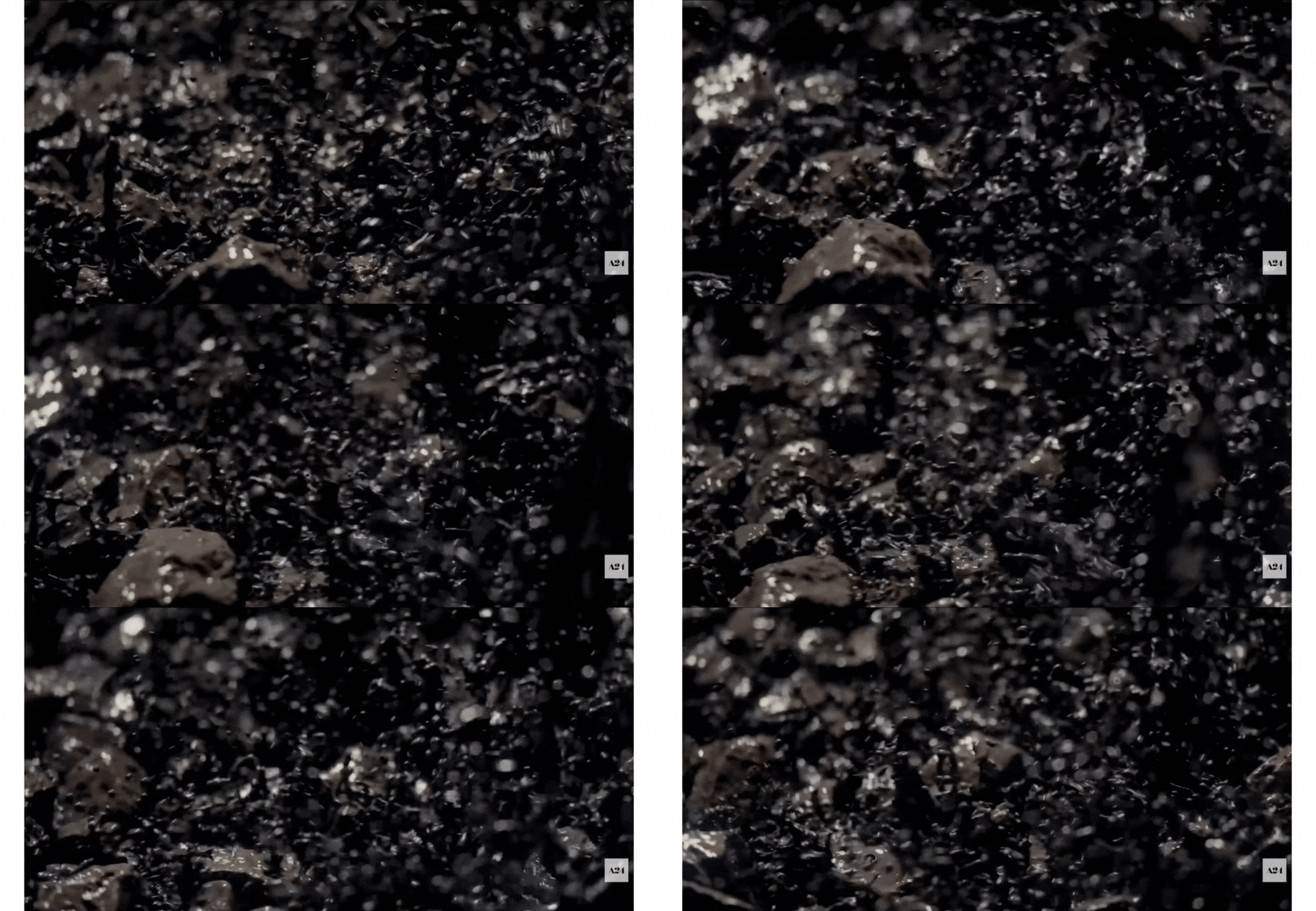
I expected a documentary. You know, talking heads, B-roll footage, graphics of maps with little highlighted regions. I thought I might learn more about Egyptian pyramids, the Colosseum, stuff like that. So when the opening credit scene, with stones explosively breaking away from a mountainside in slow motion, was entering its fourth or fifth minute, I couldn’t help but squirm with anticipation in my seat. When would the narration begin? When would they cut away to a professor of architecture with a big opinion about Brutalism? (Spoiler: never.)
It took longer than I care to admit for me to release my expectations, but once I admitted that I had no idea what I was watching, my brain opened up to accept whatever Kossakovsky wanted to offer me. Rocks dancing down a conveyor belt set to droning stoner metal for a few minutes? Mesmerizing. Three Italian men meticulously building a stone circle in the rain? Joyful and sweet. Looping aerial footage of earthquake aftermath? Devastating, breathtaking, incredible.
As I settled into the experience of the film, giving it my popcorn-oil-covered hand and allowing it to lead me wherever it wanted, it occurred to me how critical openness is to arts and culture. To look at something with an expectation that it is one thing—that a film is a documentary, that a safety pin is purely utilitarian, that a child’s drawing is naive—prevents us from allowing it to be something else.
Philosopher Timothy Morton argues for this open consideration of objects in All Art is Ecological, arguing that we must “grasp the ungraspability of a thing.” Morton refers to this as futurality, saying that art is “wonderfully open-ended, because the kind of futurality a piece of artwork opens up is unconditional. . . You don’t ever exhaust the meaning of a poem or a painting or a piece of music.” Art offers us endless possibilities—endless interests, endless futures—if we let it.
Study Questions: How might practicing openness change the way you view art? How might your everyday experiences change if you extended that openness to more than just art?